
Boundaries (NEO)
Maintaining professional boundaries:

         
Screenshot 2024 06 23 at 10.29.43 AM

When working directly with clients in their homes, it's crucial to understand the potential for boundary overstepping in caregiving. This is a serious matter that requires a clear understanding of the continuum of care and a proactive plan for maintaining ethical standards when boundary issues arise. 

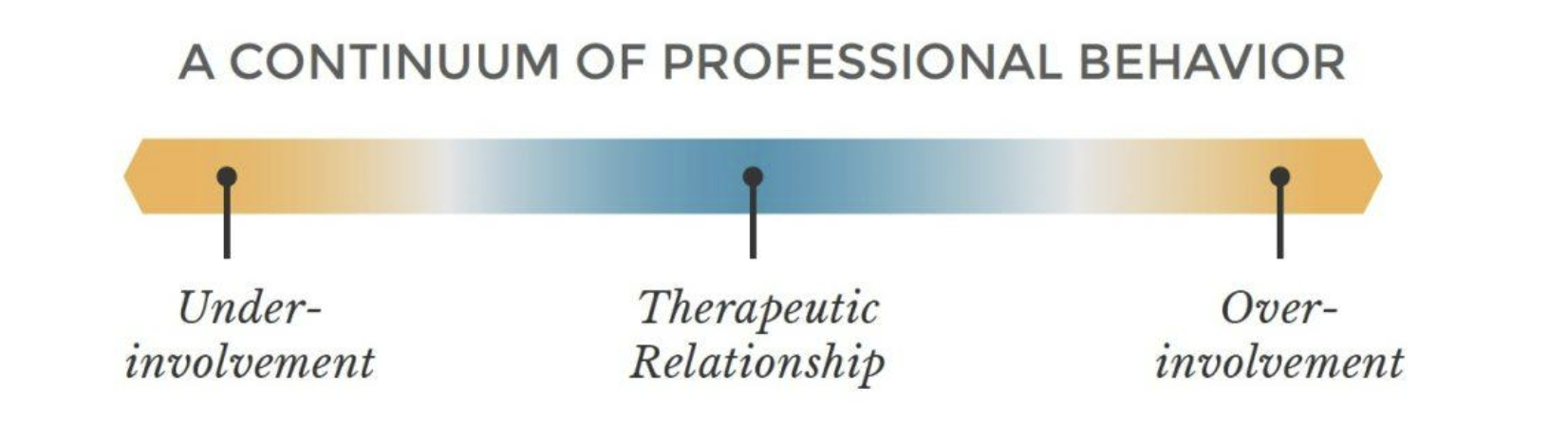
The continuum of care for professional behavior: 

  • Under-involvementimplies that the caregiver is distant, under-responsive to care needs, careless, or neglectful. 
  • Therapeutic Relationshipsare the "ZONE OF HELPFULNESS." Therapeutic relations are where care professionals' relationships should be based. 
  • Over-involvementleads to rule violations and boundary-breaking. 

Setting professional boundaries improves work-life balance and job satisfaction and reduces potential risks for inappropriate care. 

Tools for effective communication:

Effective communication is a cornerstone of maintaining professional boundaries. As a caregiver, it's essential to be attentive to both your verbal and nonverbal communication with clients. This includes fostering a 'Culture of Respect' in all your interactions with clients and their families. 

  • Voice Tone:A client or caregiver's tone may indicate different emotions. Pay attention to what is being said through the tone and pitch of communication. Caregivers may be able to avoid anything from conflicts by navigating and setting the tone for a calm environment. 
  • Body Language:So much can be said through nonverbal communication. Rolling of eyes, raising eyebrows, and unconscious twisting of the mouth in disapproval can set a negative tone with clients in the care environment. 
  • Touch:Always be aware of non-clinical touch vs. clinical touch. Clinical touch is therapeutic in nature, does not cross boundaries, and is safe. Therapeutic touch includes wearing gloves when providing personal care. 
  • Nicknames and endearmentsCan be misconstrued as offensive in the care environment. Ask your client for their preferred name. It may be Mr., Mrs., Professor, or Doctor, or it may be their first name. It is essential to ensure you are providing respectful care. 
Required
Incomplete
Boundaries in Care
Setting proper boundaries is a crucial aspect of being a care professional.

Boundaries are not just a means of protection but also a tool for empowerment. They safeguard you and the person you care for, preserving your caregiving relationship and fostering a more functional partnership. By valuing your needs and setting boundaries, you take control of your caregiving journey and enhance the quality of care you provide.

As a caregiver, it's natural to experience a range of emotions, from stress and frustration to anger. Your feelings are not only valid but also crucial to acknowledge. External stressors can sometimes hinder your focus, but setting boundaries is a way to honor these feelings. Remember, denying your needs is not productive for anyone. Proper boundaries protect not only the client but also the care provider.

Protecting your client:

  1. It's essential to maintain a professional dynamic with your client.Avoid situations where the client feels the need to provide care to you. This can blur the lines of your caregiving relationship and may lead to an imbalance in responsibilities. 
  2. Boundaries help with time management in your care and ensure you complete all needs in the care plan.You'll want to set boundaries to keep yourself on track to achieve your goals. This means communicating your goals and how reaching them interacts with your caregiving duties.
  3. Never accept money or gifts.This can compromise your licensure and lead to the potential for allegations of financial abuse. If you are purchasing items for clients, ensure you are working with the office for a plan maintained in the care plan to protect yourself and the client. 

Protecting yourself 

  1. It's important to recognize your own needs and provide self-care.Thinking about the boundaries you will implement in advance will help you put them into play when needed. It may be helpful to recognize what you feel when you are feeling stressed and determine a plan you will enact when those feelings start to present. Will you step away from the patient for a moment? Will you take a day off? Will you make sure to get out and exercise? Will you work with a therapist?
  2. Don't Isolate. Reach out to others.Caregivers frequently self-isolate as they are so used to caring for others that they have difficulty caring for themselves. Only you know what you are going through.  Reaching out does not mean that you are weak. It means you are strong enough to recognize your weaknesses and know when you are putting your mental and physical health at risk. Opening up, accepting help, and seeking growth opportunities a strength. Remember, numerous resources and networks, such as local support groups, online forums, and professional counseling services, are readily available to assist you. You should not feel as if you are a burden.
  3. Overworking.Many of our caregivers work multiple jobs, which can sometimes become very overwhelming. Try to find a schedule that works for you that is replicable, and that you can plan self-care around. If you're trying to create a schedule that works for you, work with your manager or the scheduler.
  4. Self-care is not just a necessity for caregivers, it's a priority.Neglecting your well-being can hinder your ability to provide effective care to your client. Your health and self-care are as crucial as the care you provide to your client. This includes eating healthy, making time for yourself, and participating in activities that promote mental and spiritual peace. 
  5. It's ok to say no.